
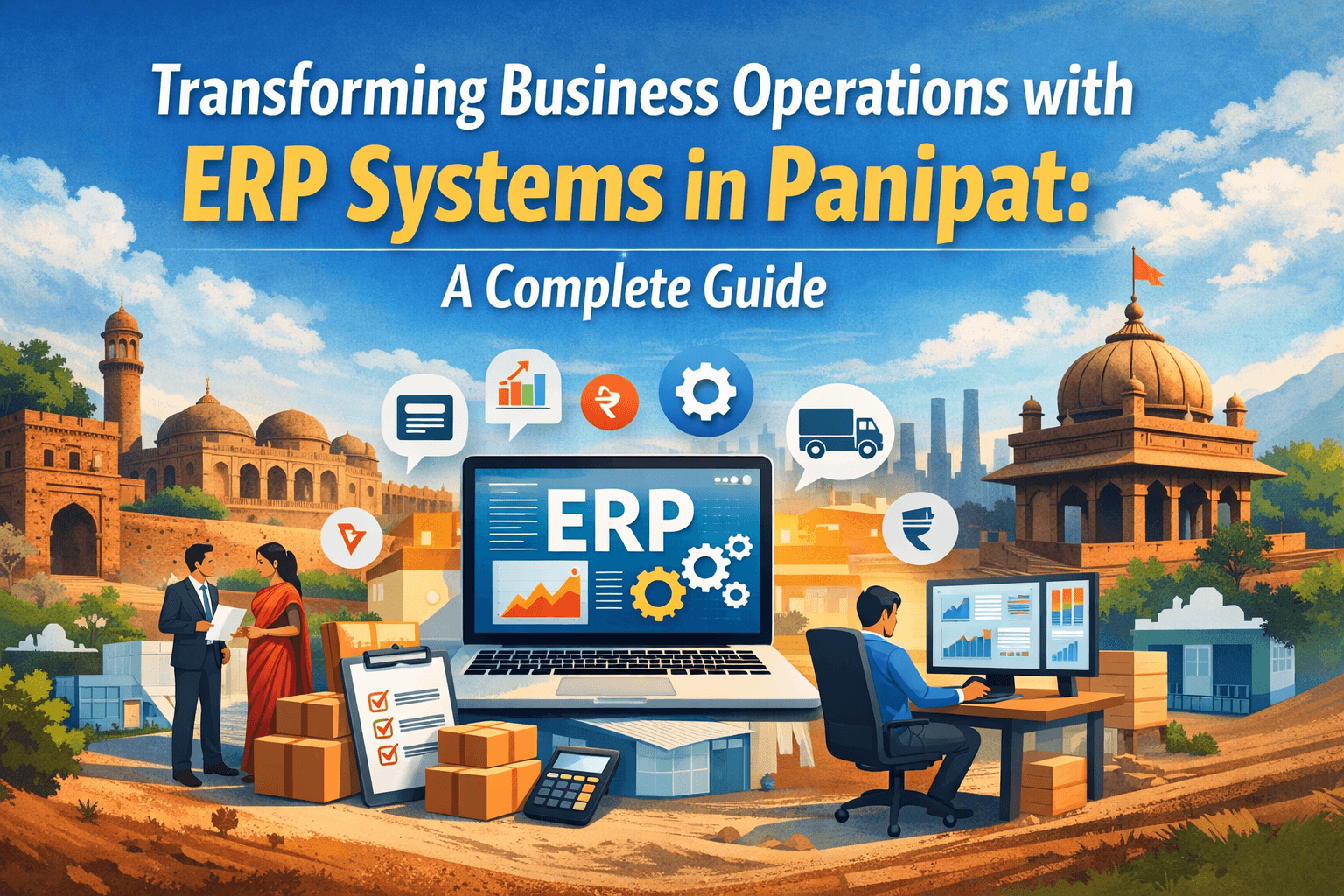

In recent years, businesses in Panipat have increasingly moved toward digital solutions to manage their growing operational complexities. Traditional methods like spreadsheets and manual record-keeping often lead to inefficiencies, errors, and poor coordination between departments. To overcome these challenges, many organizations are adopting ERP (Enterprise Resource Planning) systems, which unify all business processes into a single, integrated platform.
ERP systems have become particularly valuable for industries such as manufacturing, textiles, and trading, where operations involve multiple departments and large datasets. By centralizing information, these systems help businesses streamline workflows, improve accuracy, and make faster, data-driven decisions.
Core Modules of an ERP System
ERP platforms are built with multiple modules, each designed to handle specific business functions while sharing data seamlessly across the organization.
1. Financial Management
This module automates accounting activities, including ledger management, expense tracking, and financial reporting. It enables managers to monitor cash flow in real time and generate reports instantly, improving financial control.
2. Inventory Management
Inventory modules track stock levels, manage warehouses, and provide alerts for low stock. This ensures that businesses avoid production delays and maintain optimal inventory levels.
3. Production Management
For manufacturing units, this module organizes production schedules, monitors progress, and ensures quality control. It also helps track ongoing work and ensures timely order completion.
4. Human Resource Management
HR modules simplify payroll processing, attendance tracking, employee records, and performance evaluations. Automation reduces manual errors and enhances workforce management.
5. Centralized Data System
All departments operate within a unified system, allowing leaders to access real-time data and insights. This improves coordination and supports faster decision-making.
Importance of Local ERP Support
One key advantage of ERP adoption in Panipat is the availability of local technical support. When system issues arise, having nearby experts ensures quick resolution, minimizing operational disruptions.
Local support teams also understand regional business practices and compliance requirements, such as GST regulations. Their familiarity with the local language and work culture helps businesses implement ERP systems more effectively.
ERP Implementation Process
Implementing an ERP system requires a structured and well-planned approach:
- Requirement Analysis
Businesses identify their needs and define goals through detailed discussions. - Gap Analysis
Existing processes are compared with ERP capabilities to identify necessary adjustments. - System Configuration
Organizational data, roles, and workflows are set up within the system. - Data Migration
Existing data is cleaned and transferred to the new platform. - Employee Training
Staff receive practical training to use the system efficiently. - Pilot Testing
Trial runs help identify and fix issues before full deployment. - Go-Live and Support
The system is launched, with support teams monitoring performance and resolving early challenges.
Cost and Return on Investment
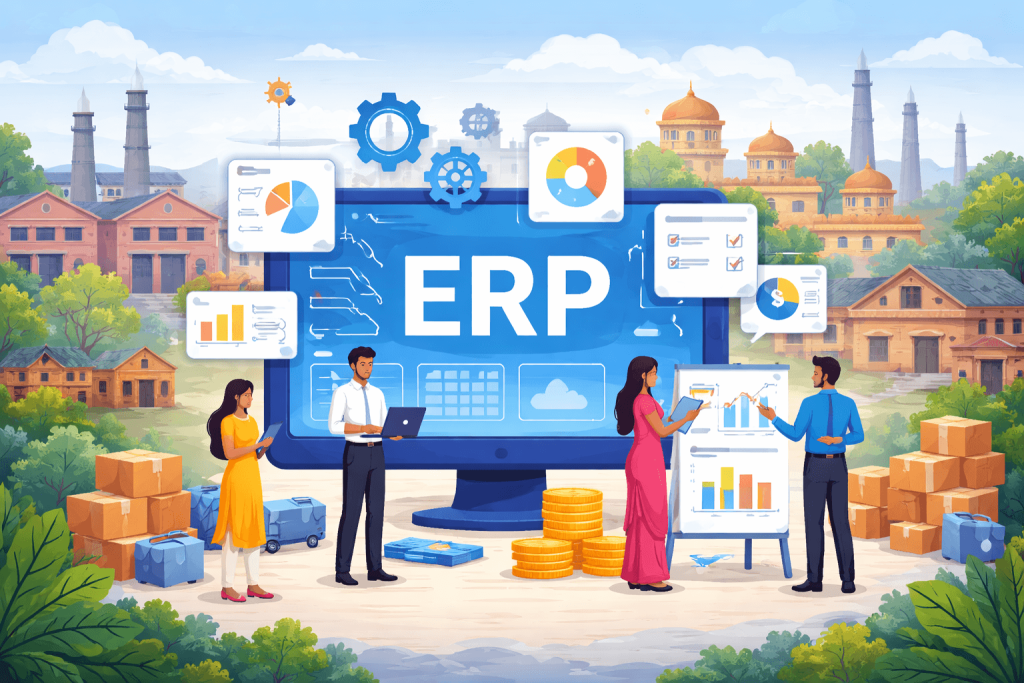
While ERP implementation requires significant investment, the long-term benefits often justify the cost. Expenses typically include software licensing, implementation services, and training.
Businesses usually recover their investment within a year through:
- Improved productivity
- Better inventory control
- Faster and more accurate financial decisions
Challenges in ERP Adoption
Despite its benefits, ERP adoption can present several challenges:
- Employee Resistance: Staff may hesitate to shift from familiar manual processes. Proper training and involvement can ease this transition.
- Data Quality Issues: Inaccurate or duplicate data must be cleaned before migration.
- Training Gaps: Hands-on training is more effective than theoretical learning.
- Post-Implementation Issues: Ongoing technical support is essential to resolve initial system glitches.
Future Trends in ERP Systems
ERP technology continues to evolve, bringing advanced capabilities to businesses:
- Artificial Intelligence (AI): Predictive analytics and automated decision-making
- Mobile ERP: Access to dashboards and reports via smartphones
- IoT Integration: Real-time monitoring of machines and production processes
- Advanced Analytics: Deeper insights through interactive dashboards and predictive reporting
Conclusion
ERP systems are revolutionizing how businesses in Panipat manage their operations. By integrating finance, inventory, production, and HR into one platform, they enhance efficiency, reduce errors, and improve decision-making.
The presence of local support further strengthens ERP adoption, ensuring businesses receive timely assistance tailored to regional needs. With proper implementation and continuous upgrades, ERP systems offer substantial long-term benefits and position businesses for future growth in an increasingly digital world. Dive deeper into enlightenment with Spiritual Vana.

Cala Joy is a wellness coach, breathwork facilitator, and passionate explorer of heart-centered living. Her articles focus on emotional healing, energy alignment, and creating a life led by love and intuition.